

CINEMA: SPACE AGE COLLAGE, TIRADES, THEORY, & CONFUSION
Thursday, August 4, 2011

Sunday, July 31, 2011
SOFT ICONOCLASM

Wednesday, July 27, 2011
THE KNIGHTS TEMPLAR VERSUS THE MATRIARCHY

“I do not approve of the super-liberal, matriarchal upbringing as it completely lacked discipline and has contributed to feminising me to a certain degree."
– Andrew Berwick, Knight Templar, Crusader, and eternal guest of his mother.
In Klossowski’s The Baphomet, the ghost consciousness of the Templars along with their Grand Master, Friedrich Nietzsche, ritually perform the transgressive dionysian acts for which they were burned at the stake, including the worship of an idol, Baphomet (a fantastical corruption of the name Mohammed)
European handwringing and fatalism about Islamic non-assimilation has a fundamental(ist) blind spot. The openness of society has evolved way beyond state sponsored multi-culturalism into elective tribalism. That is, that ALL people, not just radicalized and alienated Jihadists, can now live lives only nominally bound to society and derive much of the pleasure and meaning in them through a dedicated psychotic or resistant non-engagement with a socialized reality, which is inevitably unsatisfying and restrictive. The networked psychosis. And who better to illustrate the concept of elective tribalism, but our ultimate Facebook friend, Anders Breivik. Where we normally think of the psychotic as someone who is completely isolated in his mental terrain, the proverbial loner, it’s now clear that the internet facilitates a colonization of a variety of network actors into the fantasy life isolated from social reality; it’s interactivity is soothing. Breivik becomes the mirror image of the Jihadist sleeper agent – mimetic desire truly fills his life with meaning, and he carries out the terrorist act, unconsciously, in the name of his double, the emasculated Muslim male of dubious status, who must prove his potency though action. As with any true mimetic act, he must be completely unaware of the source of his desire.
Breivik's thought betrays an analogy between his monocultural nationalism and his veneration of a certain type of "warrior" masculinity, an analogy that revolves – as his manifesto's title implies – around the ideal of masculine independence. The "feminisation" of the European male corresponds to the "feminisation" of Europe itself. Our cultural purity is threatened by invasion from outside. Once proud, virile, and impregnable, Europe has been turned – Breivik suggests in Section 2.89 – into a woman, one who has submitted to rape rather than "risk serious injuries while resisting".
Breivik: I was out with Peter and Didrik today. We had some drinks at Peter’s bachelor pad near Bogstadveien, probably the most prestigious place to live for bachelors in Oslo and not far from where I used to live when I was still in the "game". We then went on to a nearby restaurant, had an incredible meal, drank some more and met Peter’s girlfriend and her friends. We had a few beers and talked, very cosy<3 I remember telling Christine about my career as a writer, telling her that I wasn't planning on actually selling the book but rather to distribute it freely in order to more efficiently propagate our cause to a broader audience (they were all cultural conservative btw). Christine told me that she believed I was driven by idealism, which is of course true, but that I actually lived my dream. While I didn't want to start to argue that particular factor, as I don't like appearing like a pooper or to risk blowing my cover, it got me thinking. Are, we, the reactionary revolutionary conservatives really living our dream or are we making a sacrifice? To be honest, if I felt that other people could do my job I would not do what I do, that I can guarantee you. I don't want to do what I do, I would rather focus on starting a family and focus on my career again. But I can't do that as long as I feel like a person caught in a burning spaceship with nowhere to go. If you see the ship is burning you don't ignore it and start cooking noodles do you? You put out the fire even if it endangers your life. You don't enjoy putting out the fire but it is your duty to yourself and your fellow crewmen. And let's say your crewmen have been infected with a rare virus that shuts down their rational senses and they try to stop you from putting out the fire. You can't really allow yourself to be stopped by any of them as it will lead to your collective death. You will do anything to put out that fire despite of the fact that they are trying to stop you. Anything else would be illogical.
But sacrificing yourself for others who probably detest you for it doesn't necessarily have to be a miserable experience. After all, we have the truth and logic on our side and we will learn to find rewards and comfort in our actions. After all, sometimes being uncompassionate is the most compassionate thing you can do.
Anyway, back to email farming on Facebook, aaaaarrrrggh:/ It's driving me nuts, lol. I'm currently working on French leads/FB groups. An extremely tedious and boring task - preparing quality contacts from scouring patriotic Facebook groups and sending out 100 select invitations per day (from 2 FB accounts). I've been doing this for 60 days straight now, 3-4 hours per day. FB networking isn't all that bad though as you do meet a lot of interesting, like minded people. This is the main reason why my book has been delayed. I just feel that I must send my book to at least 10 000 primary nationalists in the European world and I'm currently at 6000 email addresses. Good vocal trance music makes this task a lot less boring;). My funds are depleting gradually though; currently at 50 000 Euro + 30 000 Euro in credit limits (12 credit cards ftw), which will force me into the next phase of the operation soon. A usual day for me involves email farming, writing, sharing "moderate" resources from my book on debate groups to coach fellow cultural conservatives, smoking, eating chocolate lol, taking a daily 1 hour walk/motivational meditation and doing some occasional battlegrounds in WoW on my badass Horde resto druid. I just completed Dragon Age Origins not long ago. A brilliant game!:D It's important to have fun a few hours every day. I regret to admit that I've become a notorious downloader of pirated movies, series and games etc. but have noticed that an increasing number of sites have been closed down lately. Stealing is bad, I admit, but then again, when you have devoted your entire life to a good cause you can allow yourself some naughtiness especially if it can contribute to conserve your funds, cough;). Yes, yes, no ones perfect:P
Breivik, following the logic of the mediatic sphere to the letter, sees his terrorist acts as the essential marketing step in getting his manifesto (that is, his ego) out – he speaks of sacrifice or martyrdom – he wants to be the sacrificial victim that will restore the senses of his stupefied fellow passengers on the burning spaceship, but this is a martyrdom operation as masochist performance art. He wants to be Jan Palach, the immolating Czech national hero of resistance. It is only this, or Islamic re-colonization, that will confirm the fundamental reality of the networked psychosis. But the weak, feminized Norwegian state won’t ever punish him sufficiently. It can only love him to death and wave flowers.
Favorite Cologne: Chanel Platinum Egoiste
Monday, July 25, 2011
FAUX PROLETARIANS OF THE WORLD UNITE!

As with most things, Pappy did it first. But let's note that his sartorial sensibility was impeccable. He was a genius with clothes, particularly his own. And a complete varietist when it came to headgear. Beret, Cowboy Hat, Fedora, Overseas Cap, Admiral's Visor hat, and of course, the baseball cap. But Bull Feeney was, perhaps, an authentic proletarian, and a jock at Portland High to boot. Esquire Man avant la lettre. What today's fashionable gringo movie director (with the notable and admirable exception of Peter Bogdanovich) says with a melancholic affectation of casualness, is: "I wish I made as much money this fiscal year as a baseball player does." And: "I'm exactly like you, dear comic-conista denizen, except I live in Malibu. Yeah, sure, come over -- anytime."
Saturday, July 23, 2011
IMAMURA/PECKINPAH

Stills, those interlopers in the cinema, break up not just the flow of time, but the "natural" linkage of sound and image, and shock us into a parallel diegesis, and --- as a bonus, the gap, the ellipsis goes straight into our dreams. Our dreams are this cutting room killing floor.
WARNING: The video BELOW contains images of sadistic, unjustified domestic violence to domestic Chickens, and to humans too, but in that case it is justified.
Friday, July 22, 2011
PERIPETIAL REPLAY

The textual richness of the “event” which unleashed a veritable ninja-tsunami of sublime racist cliches about The Murdoch’s Guoanbu Controller, Dame Wendi Murdoch (I’m kidding, kidding! Or am I?) needs to be unpacked. Everyone agrees, I think, that its spectacular interest is high. Why?
1. The men of the clan, so focused on projecting their defensive alpha authority in the frontal mode, that is toward the camera, that they are vulnerable to attack from the periphery. This is perhaps a cognitive occupational blindness of media workers, the fatal assumption that the periphery doesn’t exist. Not only does it exist, but that is where things happen. A debordian rule: Always Look Where the Camera is Not.
2. The image-fact that The Murdoch is both in need of defense, and defensible, inevitably humanizes him. That his defender is a Chinese woman is beautifully metaphoric, something that sino-atavists are naturally not taking lightly. A subtle prismatic inflection of the master image, that is, of the Fall of Murdoch, has occurred. If it were a corporate goon slapping aside the intruder – we’d think, sure, business as usual. In that case we could perhaps with justice speak of “ninja reflexes” – but in this case it is a capitalization on an opportunity that always exists in potential, something that people versed in the languages of strategy and power should always be on the lookout for: the convertible event, the event that can be turned or crystallized. That husband and wife should be equals and peers should surprise no one, but in this case, strangely, it does.

Tuesday, July 12, 2011
BORDER DANCE

The modern operation, according to Latour:
1. Set up a border, with steep & dangerous abysses, fiercely guarded, with flaming swords against impurities.
2. With deliberate schizoid intent, set up an elaborate smuggling network to traffic in the impure, the clandestine.
3. Force everyone to choose freely between being a Border Guard and a Passeur, and then make them forget their assigned role.
Friday, July 8, 2011
THAT FIRE WHICH REFINES THEM

SERGE DANEY: And at some point, I got scared, scared for me, I told myself I was developing a ridiculous sense of superiority in relation to television. TV doesn't care about being superior or inferior to me, I'm not in its world, I only exist because I put myself there by force, I said: "Well, I enlighten myself every day, it amuses me, it amuses people like me." After that... It's not even understood. Beyond that.
REGIS DEBRAY: Which is to say that you can't criticize television –
SERGE DANEY: No.
REGIS DEBRAY: - without criticizing the public it's targeting?
SERGE DANEY: There. I think I'd always doubted, I'd always balked at that because I didn't like it, the idea that you have to criticize the public. But I think that today we have to because of the recent evolution of television.
Who is targeting who? When a mob, with its inevitable ENTHUSEMIASMIC or ideological burden, takes up or seizes -- inhabits -- an IMAGE, rather than a post office or a barricade -- we are dealing with a specific sort of Ellulian crystallization -- a mutual discharge happens -- the Fascist Event is conveyed into its image, which swells and shimmers because it has a material force which cannot be any longer questioned, but at the same time the self-same image becomes more reflexive too, it is no longer "mere image" that is, the image scorned, theoretical, unseen or ideal, but this Latourian hybrid: the lived-in image-crowd, which in turn can be spectacle and attractant, drawing even further discharges into itself.
To refuse to throw oneself under the Juggernaut of Our Noble Whatever is downright prufrockian. And so...
Thursday, June 30, 2011
WHY DRUGS ARE BAD

Sorry, can't resist...
Movie critics tend to fall in the "assaultive," camp, but Foundas again puts Bay in context of recognized auteurs. "There's a lot of directors historically who like to move the camera a lot. They just tend to do it in one take instead of these short edits," he says. "But maybe he's kind of like Marcel Ophuls on methamphetamine."
Scott Foundas was so skullfucked by Transformers Trois that he a) is spewing meaningless absurdities like Serge Daney on GHB concerning Bay's style, and b) has confused the son with the father.
He's right though, I did detect a little hommage in the Clermont-Ferrand sequence of the first Transformers. now, Everybody get to rehab!
Friday, June 24, 2011
MORE FATWAS FROM BADIOU

Ok , amigos. Here are some helpful and practical aesthetic counsels from the Yoda of his generation (with my helpful parenthetical explanations)
9. The only maxim of contemporary art is not to be imperial. This also means: it does not have to be democratic, if democracy implies conformity with the imperial idea of political liberty. (OK, this means Socialist Realism is back, thank God!; also you can also enjoy Jew Suss and the Triumph of the Will (in the comfort of your home, of course.)
10. Non-imperial art is necessarily abstract art, in this sense : it abstracts itself from all particularity, and formalizes this gesture of abstraction. (Good news for Windham Hill, screensavers, and Ambient Black Metal.)
11. The abstraction of non-imperial art is not concerned with any particular public or audience. Non-imperial art is related to a kind of aristocratic-proletarian ethic : Alone, it does what it says, without distinguishing between kinds of people. (Don't worry about starving to death. Some of my ideas can be quite nourishing.)
12. Non-imperial art must be as rigorous as a mathematical demonstration, as surprising as an ambush in the night, and as elevated as a star. (Don't rock the drunken boat, Arthur Rimbaud, or we will all drown...)
13. Today art can only be made from the starting point of that which, as far as Empire is concerned, doesn't exist. Through its abstraction, art renders this inexistence visible. This is what governs the formal principle of every art : the effort to render visible to everyone that which for Empire (and so by extension for everyone, though from a different point of view), doesn't exist. (So, let me check with Empire for a list of approved objects, which is everything imaged, then I make art about the inexistent. But then must it go on the list of approved objects? And then I get confused. Heisenberg? Any light on this?)
14. Since it is sure of its ability to control the entire domain of the visible and the audible via the laws governing commercial circulation and democratic communication, Empire no longer censures anything. All art, and all thought, is ruined when we accept this permission to consume, to communicate and to enjoy. We should become the pitiless censors of ourselves. (OK, what the Imam is saying is that my thought is ruined by thinking it -- because I can only think things that the Empire has pre-thought for me. But if I do my own censoring, I am free.)
15. It is better to do nothing than to contribute to the invention of formal ways of rendering visible that which Empire already recognizes as existent. (So, relax, and don't worry about the Empire. There is nothing you can do. Except keep buying my books. These aren't the droids you're looking for.)
Seems easy enough, right? Not just another crazy pied piper of Hamelin Adorno Bullshit Aesthetics wishlist!
In other news, Badiou orders all babies to be hygienically disposed of along with their brackish bathwater.
ANCIENT ASTRONAUTS

Dominique Strauss-Kahn: The first book you’ve chosen isn’t about economics at all; it’s a work of science-fiction, Isaac Asimov’s Foundation trilogy. But was it part of what inspired you to become an economist?We don't? You are too modest, comrade. To some of our cadres, you are, verily, an intergalactic savant. Please keep saving us. Thanks.
Paul Krugman: Yes. This is a very unusual set of novels from Isaac Asimov, but a classic. It’s not about gadgets. Although it’s supposed to be about a galactic civilization, the technology is virtually invisible and it’s not about space battles or anything like that. The story is about these people, psychohistorians, who are mathematical social scientists and have a theory about how society works. The theory tells them that the galactic empire is failing, and they then use that knowledge to save civilization. It’s a great image!! I was probably 16 when I read it and I thought, “I want to be one of those guys!” Unfortunately we don’t have anything like that and economics is the closest I could get.
Thursday, June 23, 2011
LESTER BANGS IS (STILL) DEAD

Ok, so there is this "musikant" out there that goes by the name of Spiagge Sporche or something like that. HE'S A GENIUS. Allow me to emphasize this. Genius, in that modern, loosey way we speak of genius, that is to say, he managed to get some attention for something fundamentally mediocre.
It's a simulacra of Suicide -- y'know that old funk band that Rev and Vega used to have. But not really, not at all, actually -- something has eluded the artist -- because Suicide, if they had anything, had ENERGY. This fellow has fervently copied the programming, (what do I know, he probably majored in post-punk at julliard, specialised in analog sequencers) but S.S. has apparently given him/herself some sort of date-rape drug in the art process. And so we finally get to the interesting part -- it's as if he is date-raping his muse (Suicide) & his own mediocre talent at the same time. This seems like usual practice these days -- anxiety of influence has dropped to anemic levels. Whose fault is that? Yours for listening. Lester Bangs, for being dead.
It's time to take back the NIGHT from these weasels!!
Monday, June 13, 2011
OEDIPUS ON THE ROAD

If someone copying a prototypical icon is unable to experience in himself that which he depicts, if while following the original he fails to make contact with the reality of it, then (being honest) he will try as precisely as possible to reproduce in his copy the prototype’s outward features; but it almost always happens that, in such a case, he will not comprehend the icon as an opening, and so, lost in copying the fine lines and brushstrokes, he will interpret unclearly the icon’s essence.
But if, on the other hand, through the prototype he is opened up into the spiritual reality depicted on it, and thereby comes to see it clearly (if secondarily) he will – because he posseses the living reality of his own aliveness – manifest his own viewpoint, and thus swerve from a strict calligraphic adherence to the original. In a manuscript you write describing a country someone else has previously described in an earlier manuscript, you will see your own words and phrases in your own handwriting; But the living basis of your manuscript is assuredly identical with that of the earlier one: the description of the country. Thus, the variations arising between successive copies of a prototypical icon indicate neither the illusory subjectivity of what is being depicted nor the arbitrariness of the iconpainting process but exactly the opposite: the living reality, which remaining itself, nevertheless will appear with those variations that correspond to the spiritual life of the iconpainter who seeks to comprehend that living reality.
Thus (ignoring mere servile reproduction) the difference between a prototypical icon and its iconic copy can approximate quite precisely that between an explorer’s account of a newly discovered country and a later journeyer’s narrative who visits that country because of the first explorer’s account; no matter the importance of the first account, the latter narrative may well be more exact and complete. Just so in iconpainting: sometimes an iconic copy can become particularly precious, one whose extraordinary indications confirm both its spiritual truth and it’s supreme correspondence to the spiritual reality it depicts.-- Fr. Pavel Florensky, Iconostasis
“Super 8 was never intended as an homage to any films in particular. Before we were shooting I told our cinematographer, Larry Fong—who I met at 12 making Super-8 films—that I didn’t want the film to look like it was made in 1979, but I wanted it to look the way we remember films looking from 1979. That is to say, it needed to be its own thing, with visual and rhythmic motifs that allude to a different era of moviemaking, but made using tools and techniques of today. I sort of wanted to build a bridge between then and now." – J.J. Abrams.
Wednesday, June 8, 2011
THEY GOT GAME

According to a new study conducted recently by Saatchi & Saatchi S entitled “Engagement Unleashed: Gamification for Business, Brands and Loyalty,” approximately half of working Americans are engaging in online social gaming during a typical work day. But more importantly, 55% of Americans want to work for a company that utilizes gamification to increase productivity.
The most surprising result is that younger Americans, (read as Lady Gaga fans) which is also one of the demographics more largely out of work these days, are willing to be paid less to work for a company that is socially-minded. Thus, social interaction and the workplace culture are becoming more important than more money these days - at least to some people - even with a struggling economy.
Well, naturally.
The people have spoken. They want their serfdom to be fun and engaging. Yet, it is an undeniably brilliant move by the beneficent overlords to mirror-shift the honor culture of achievement/merit/humiliation from money and actual tangible goods to game performance. Ludic merit means more for everybody. Nobody's self-esteem suffers.
Tuesday, May 24, 2011
THE VIRTUAL TRANSNATIONALIST

"For many national citizens, the practicalities of residence and the ideologies of home, soil and roots are often disjunct, so that the territorial referents of civic loyalty are increasingly divided for many persons among difference spatial horizons: work loyalties, residential loyalties, and religious loyalties may create disjunct registers of affiliation."
A few more thoughts on OBL before he vanishes again into the ahistorical.
Impure spaces. Capital no longer requires the “technology” of the nation-state. Why, after all, should power be made to flow through the ancient and constricted aqueducts of the fabled Hegelian state? There are now many contenders for the post-statist impure political space, but the paradigmatic community of this sort is the internet, i.e. the real home of Bin Laden, the virtual culture-hero.
So what sort of rhetorical battle was Bin Laden fighting? Was it the old anti-colonial/anti-imperialist battle of 1945-1989? Was he a political fighter, or a peculiar type of baudrillardean image specialist? A creature of western security agencies? Or a Dostoyevskian nihilist? All of the above. He’s a baffling nowhere man: a rich Saudi playboy fighting his family’s chief benefactors, the Sauds, living most of his adult life in exile by launching an apparently quijotic war against the ghostly spirit of the United States, which no longer exists in a certain place, in any case. A titanic battle between virtualities.
At its most utopian, Islam preaches a sort of “withering away of the state” through a perfectibility of human action, an ideal community without need of either despots or ulama: the ummah. That utopian sense was lost in the chaotic maze (from the outsider’s perspective, naturally) of Islamic jurisprudence, which was perhaps a necessary conservative move to protect Islam from its human tendency to fragment and schism along tribal lines.
Monday, May 2, 2011
A HERO FOR OUR TIME

With the new conditions that now predominate in the society crushed under the iron heel of the spectacle, one knows, for example, that a political assassination finds itself placed in another light; can in a sense be sifted. Everywhere the mad are more numerous than before, but what is infinitely more convenient is that they can be talked about madly. And it is not some kind of reign of terror that imposes such mediatic explanations. On the contrary, it is the peaceful existence of such explanations which should cause terror. -- Debord, Commentaires
This doesn't happen every day: It's mythic. A Nobelist for Peace kills the arch-terrorist with a stroke of a pen. From here on out, convinced Salafists can be identified as those odd people staring wistfully out to sea. And Nothing is too good for the man who shot Liberty Valance, etc.
Melville: But as in landlessness alone resides the highest truth, shoreless, indefinite as God -- so, better is it to perish in that howling infinite, than be ingloriously dashed upon the lee, even if that were safety! For worm-like, then, oh! who would craven crawl to land! Terrors of the terrible! is all this agony so vain? Take heart, take heart, O Bulkington! Bear thee grimly demigod! Up from the spray of thy ocean-perishing- straight up, leaps thy apotheosis.
Wednesday, April 27, 2011
DFW: LUI AND MOI, CORSICAN TWINS

A tragic note, pregnant with lost possibility, found among the effects of one David Foster Wallace, American academic and secondary Nabokov character.
(Redacted)
Random House
1745 Broadway
New York, NY 10019.
Dear Dave, (if we may...)
We love it! Your brilliant 666 pp. proposal for a humorous novelization of the 1911 Encyclopedia Britannica, strikes us not at all as (as you put it in your own inimitable yet humble way) "a solid tie-in that also may resolutely fulgurate my writer's block while zinging the average reader-wretch to the next level of consciousness..." but rather as the next great chapter in the building of your household cult. We're firing up the hecatombs with our crack pipes. Enclosed is a check. Get cracking!
BLONDE ON BLONDE

Imperium is an intelligible sphere whose centre is everywhere and whose circumference is nowhere.
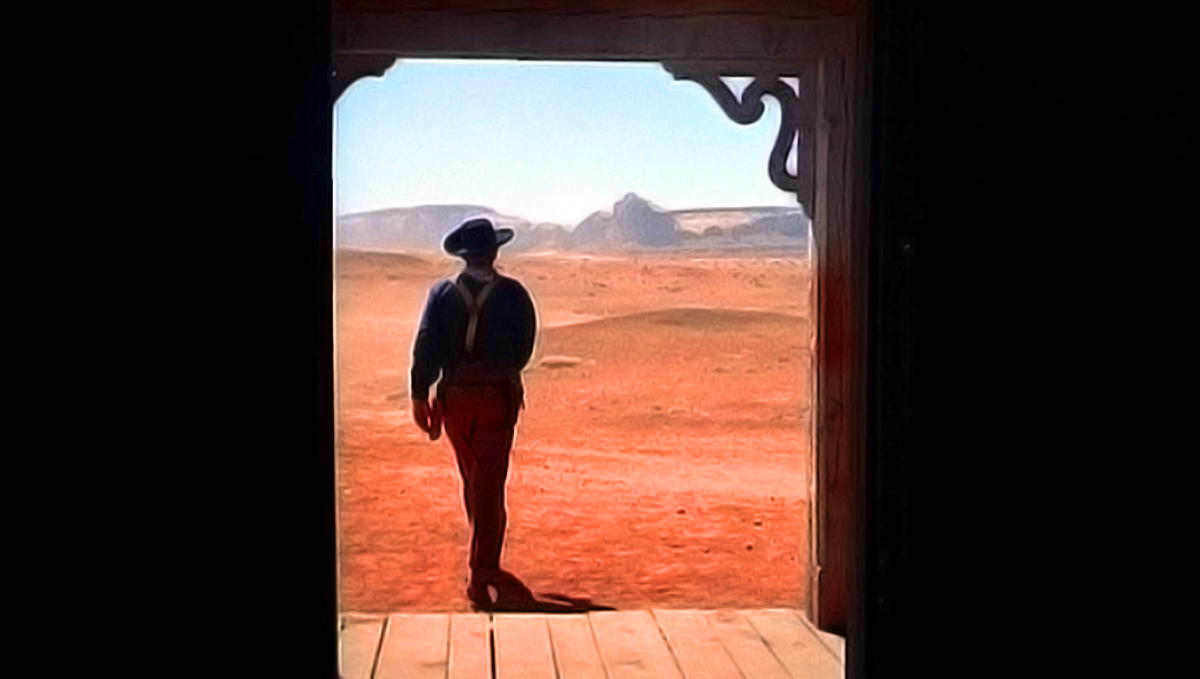
Right now, as Pan-Europe and China inaugurate a new humanitarian era of post-modern ipod colonialism, to look at Denis' film as a post-colonial treatise is not so interesting. After all, Denis, like Duras before her, is one of those cosmic colons. The psychological mestizo. On its surface, White Material just seems the usual meme about "Africa" -- Conrad, Casement, Kurtz, Camus, and Kapuscinski.
But no...some kind of allegory about Madonna and the kids from Malawi. But also a bit like Winchester 73, a dream version but with several rifles flying at once. Some fundamental lyric balance between the persons in the drama. Like Jancso in Cameroon. The power never has a center or a color. It flows, Bressonian, from person to thing and back. The blonde hair (Denis' own, let's remember) -- the immune system of the various bodies reject it. The mother's perverse and fixed dedication to the land, identification with the land, like in Duras, only points up the fleeting mobility, the insouciance of the other agents. Only Capital makes the land visible, and lovable.
At the end of the film, the surprise after many red herrings is that she, despite herself, must become the toxic Dostoyevskian avenger. La Prisionniere du Desert. Rather ambiguous stuff, this.
Besides -- who is not a colonized subject these days...? To compete for the honor of most colonized, or most abject seems beside the point -- one of those classic nasty + pointless fights for low stakes.Let us pass over it in silence.
Saturday, April 23, 2011
HOW TO HIDE BEHIND AN EMPTY SIGN

Alt.corporate rocker Patti Smith, her myth already swirling about her, letting us know that all desire is mimetic.
Thursday, April 21, 2011
OZU GENTLY CONFOUNDS THE KULESHOV EFFECT

“Vespas dressed her hair…”
"Eisenstein's montage was linear, like a chain. Distance montage creates a magnetic field around the film... Sometimes I don't call my method "montage". I'm involved in a process of creating unity. In a sense I've eliminated montage: by creating the film through montage, I have destroyed montage. In the totality, in the wholeness of one of my films, there is no montage, no collision, so as a result montage has been destroyed. In Eisenstein every element means something. For me the individual fragments don't mean anything anymore. Only the whole film has the meaning." -- Peleshian


This astonishing and crucial four minute sequence in Only Son where Ozu almost too casually draws in a lusty Austrian operetta into his surgical theatre of connotation becomes the most daring auteurist gesture of Burchian de-centering – as if to say: Watch! anything can be in, even outside, my story and still be my story. And the crucial thing with Ozu is how that art of connotation, montage of spirit, can be kept intact, and even strengthened, like Peleshian’s films, mysteriously, over some distance.
The sequence, a musical whole that is perfect by itself, but also indivisible from the rest of the film, begins with the ghost infection of the prior one. They have just visited the beloved schoolmaster played by Chishu Ryu, the implicit cause of all the “trouble” in the diegesis, poignantly and embarrasingly reduced to selling pork chops – the banner let fly for an unseemly amount of time, almost mockingly. The schoolmaster loaned our hero a charm to keep the baby asleep and without tears. It works too well. The charm ritually displayed upside down on the wall pulls us back to the pain of the schoolmasters smile. Then, Ozu gives us the shot of the hero’s wife sewing alone in the house. The shot reverses, we see her back and a different sort of charm on the wall: Joan Crawford. One vamp leads to the other, one blonde face to another, and we are cut directly into the operetta. It is only after a healthy bit of song that we see that our hero has taken his mother to the movies, the yowling of which that she obviously finds incomprehensible. When he pulls himself out of reverie to notice her disquiet, he explains, with the full force of Ozu’s comic effect, that “it“ is called a talkie. The fraulein keeps singing, and then when Ozu cuts back to the mother, she is looking at her bedazzled son with a look of contempt. At this point, we realize, along with her, that the mother’s visit has not been the mild irritation he has suggested to others, but he has usurped it as a selfish holiday for himself.
The film within the film goes into an erotic crescendo, as the leading man, overcome by his own swooning emotion, moves to kiss the fraulein’s hands in close up. This risqué moment prompts our hero to worriedly check his mother’s reaction. Of course, she is dozing. And then he looks over to check to see if his neighbors have noticed this breach of excitement from his bumpkin of a mother. And then we see his own exasperated contempt at her for having his narcissistic pillow ungently ruffled. The mother wakes up, smiling sheepishly, indicating that he too can return to his preferred dreamscape. Meanwhile the Fraulein has run into a field, and the camera tracks with her coy and halfhearted escape from her suitor. Now we see that this is the secret reason for the “appropriation” – in the clash of dynamism (economic and/or social) versus stillness, in the "willing" girl who wants to be pleasantly trapped by erotic circumstance – this both formally and connotatively fingers our protagonist’s metaphysical problem: his swoony fatalism. It is this problem, this moral failing in her son, that the mother diagnoses in the movie theatre, even while asleep.
Look over these images again. The part is utterly the whole.
Subscribe to:
Posts (Atom)